
Begin a La Puente People Search
The best first source depends on what is already known. A full name can go into the Los Angeles Superior Court party search, the City of La Puente business directory, the California business search, a professional license lookup, or the State Controller's unclaimed property search. An address belongs in the Los Angeles County Assessor Portal first. A deceased relative may be easier to trace through an obituary, a death record, and a probate case. These sources serve different aims, so one result should confirm another before two records are treated as the same person.
La Puente people search work often crosses city, county, and state lines. The city keeps permits, code files, business licenses, council records, and local requests. Los Angeles County holds deeds, vital records, voter files, parcels, court cases, and jail data. California agencies add corporate filings, professional licenses, state custody records, unclaimed property, and archival collections. Use this short path to keep the search focused:
- Write down the full name, name variants, known address, approximate dates, and the relationship being traced.
- Search the official source tied to that fact, such as the court for a party name or the assessor for an address.
- Compare a second field, such as a filing date, parcel, business address, or case type, before accepting the match.
- Move to an in-person index, mail form, library database, or records request when the web result stops.
- Save the custodian's record number so a later copy request can be precise.
Names deserve special care in La Puente. Compound surnames, changed surnames, and dropped accents can affect court, business, voter, and recorder indexes. Try each supported form, but do not treat spelling alone as proof of identity.
Note: A voter status tool confirms a voter's own record with identifying fields; it is not a public name directory.
La Puente Search Starts Countywide
City Hall is useful, but it does not keep the main name indexes for La Puente. The Los Angeles County Registrar-Recorder/County Clerk records deeds, marriage records, fictitious business names, and related filings. The county Assessor links an address to an Assessor Identification Number, or AIN. Los Angeles Superior Court publishes modern case searches. City Clerk records add the local facts found in permits, contracts, meeting files, and business licenses. The full access rules and request steps belong in the La Puente public records system.
The recorder and county clerk share a headquarters, while the City Clerk works at La Puente City Hall. Call only to confirm procedure. The recorder will not perform real estate index searches by telephone.
LA County Recorder
12400 Imperial Highway
Norwalk, CA 90650
In-person name/year index
Registrar of Voters
12400 Imperial Highway, Room 2013
Norwalk, CA 90650
800-815-2666
The RR/CC service hub shows the county record families in one place. Its screen below helps distinguish the Recorder and County Clerk path from an assessor or court search.
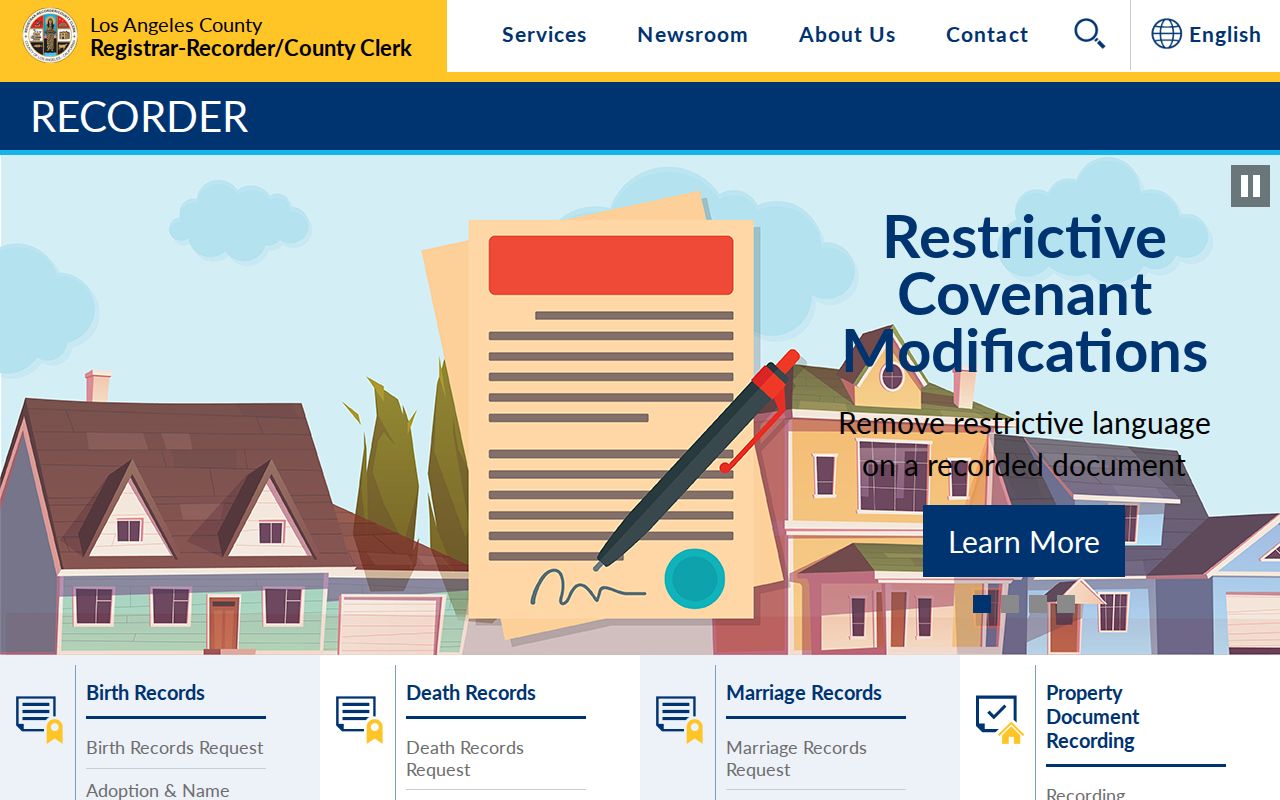
Use that hub for copies and service details, then follow the office-specific procedure for the record type.
Why La Puente Deeds Stay Offline
Los Angeles County has maintained real estate records since 1851, yet its official recorder does not offer a public internet index. The RR/CC cites address-posting limits for elected and appointed officials and a County Counsel recommendation. This is a major local exception. A generic web search may suggest that every deed trail is online, but the county's own route ends at the Norwalk index rooms.
Recorded documents are indexed by a person's name and the year of recording, not by street address. Records from 1851 through 1957 are reviewed on the lower level. Records from 1958 forward are on the second floor. Appointments can be set up to two weeks ahead, and staff will not run the index by phone. The practical method is to identify the parcel and likely owner online, then bring names and date ranges to Norwalk.
The RR/CC real estate access notice makes that offline rule clear.
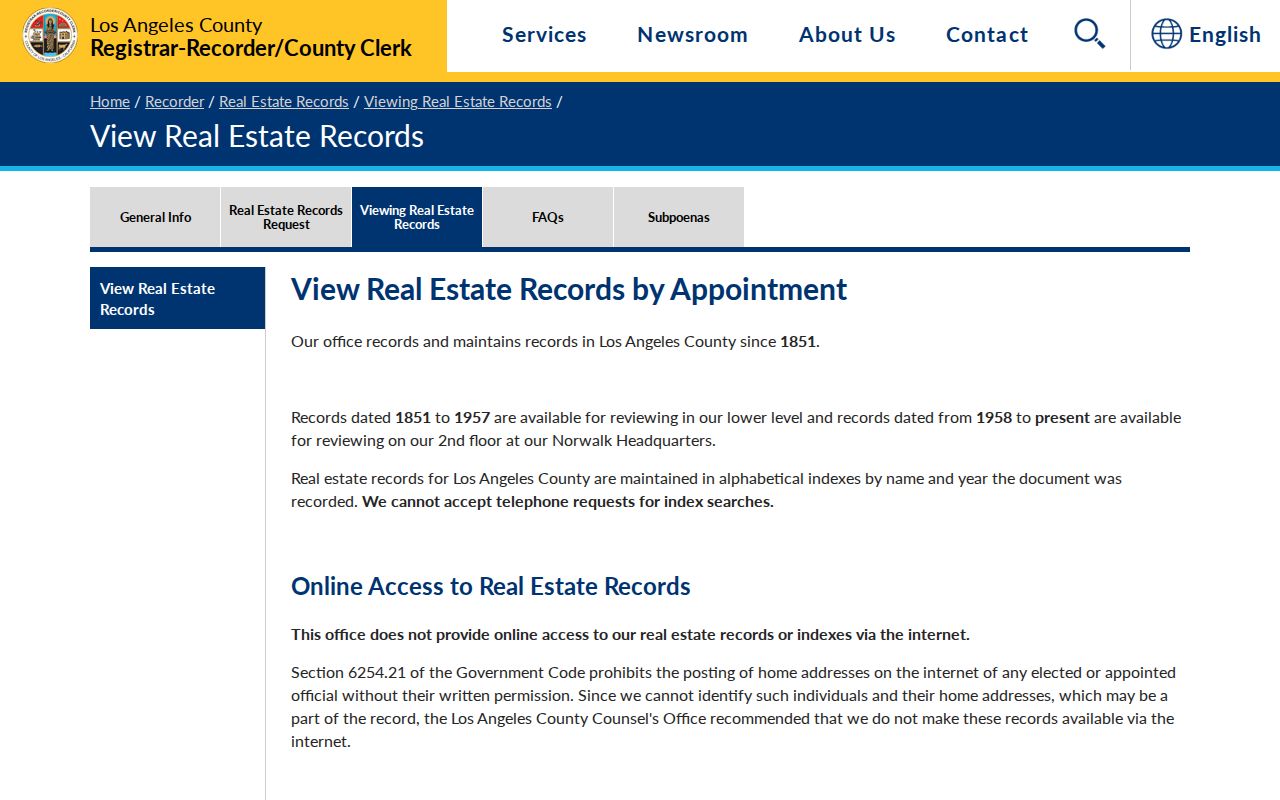
The absence of a web index does not mean the record is closed. It changes the access channel.
Insider path. Search the Assessor by address, save the AIN and any confirmed name, then use the RR/CC grantor-grantee index in Norwalk.
Trace La Puente Address Records
An address search begins with jurisdiction. Postal labels, unincorporated pockets, nearby communities, and city borders do not always align. La Puente asks people seeking planning, building, safety, or code files to confirm that the site is inside city limits. The city-linked address and zone lookup supplies that check. County parcel tools then provide the broader land record.
Enter a street address or AIN in the Los Angeles County Assessor Portal. A parcel result can show its situs address, the place where the parcel sits, along with its AIN, assessment facts, property traits, and map link. The mailing address, when public and different from the situs, can help distinguish an owner from an occupant. Protected information may be suppressed.
The live Assessor entry screen shows the two main search keys used for a La Puente people search.
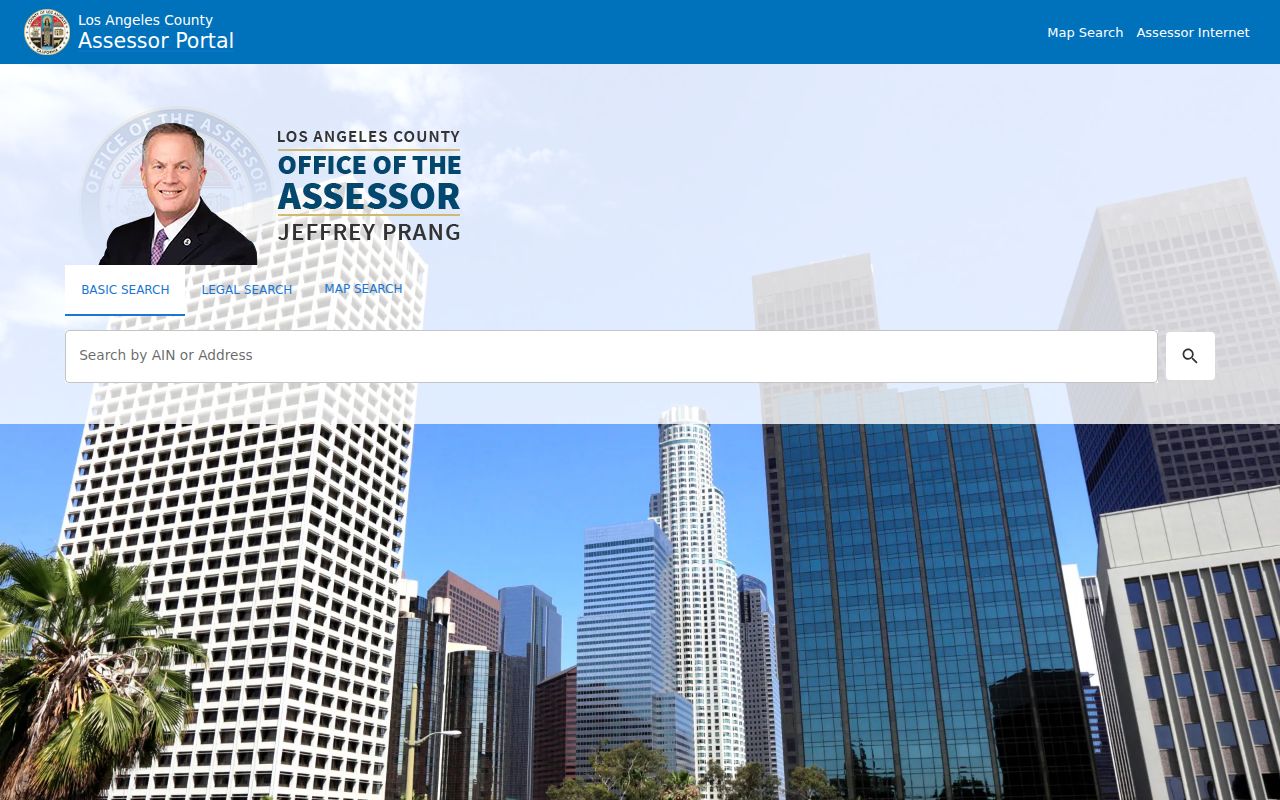
After the parcel is confirmed, the record trail is: address to AIN, AIN to assessed parcel, confirmed owner name to the Norwalk deed index, then recorded transfers to prior owners.
- AIN
- The Assessor Identification Number assigned to a Los Angeles County parcel.
- Situs
- The physical location of the property, which can differ from an owner's mailing address.
- Grantor and grantee
- The person transferring an interest and the person receiving it in a recorded document.
- Legal description
- The tract, lot, block, or other formal land description used in recorded documents.
Note: City permit and code files require a separate City Clerk request when the online document portal does not contain the needed record.
Search La Puente Court Parties
La Puente cases belong to the Superior Court of California, County of Los Angeles. There is no separate modern municipal court for the city. The court's Public Access Online Services, or PAOS, lets a user search Civil, Small Claims, Family Law, and Probate cases by party name. A separate criminal tool searches a defendant name for a case number. Once a case number is known, the Access a Case system can lead to a docket or case summary and, where offered, purchasable document images.
Coverage differs by case group. The court FAQ lists Family Law, Probate, and Unlimited Civil from 1983 forward; Limited Civil from 1991; and Small Claims from 1992. Older material requires the Archives and Records Center. Juvenile and adoption cases, sealed records, and protected portions of family files are not public. A name match is only a lead. Compare the case type, filing date, party role, and file itself before concluding that it names the person sought.
| LA Court Index | Names Covered | Online Span | Next Step |
|---|---|---|---|
| Civil name search | Person or company parties | Varies by category | Open case by number |
| Probate and family search | Parties in indexed cases | 1983 forward | Review restrictions and docket |
| Criminal defendant search | Named defendants | Modern indexed cases | Confirm identity in case file |
The court's case information hub is the official bridge from a known name or case number to the correct access service.
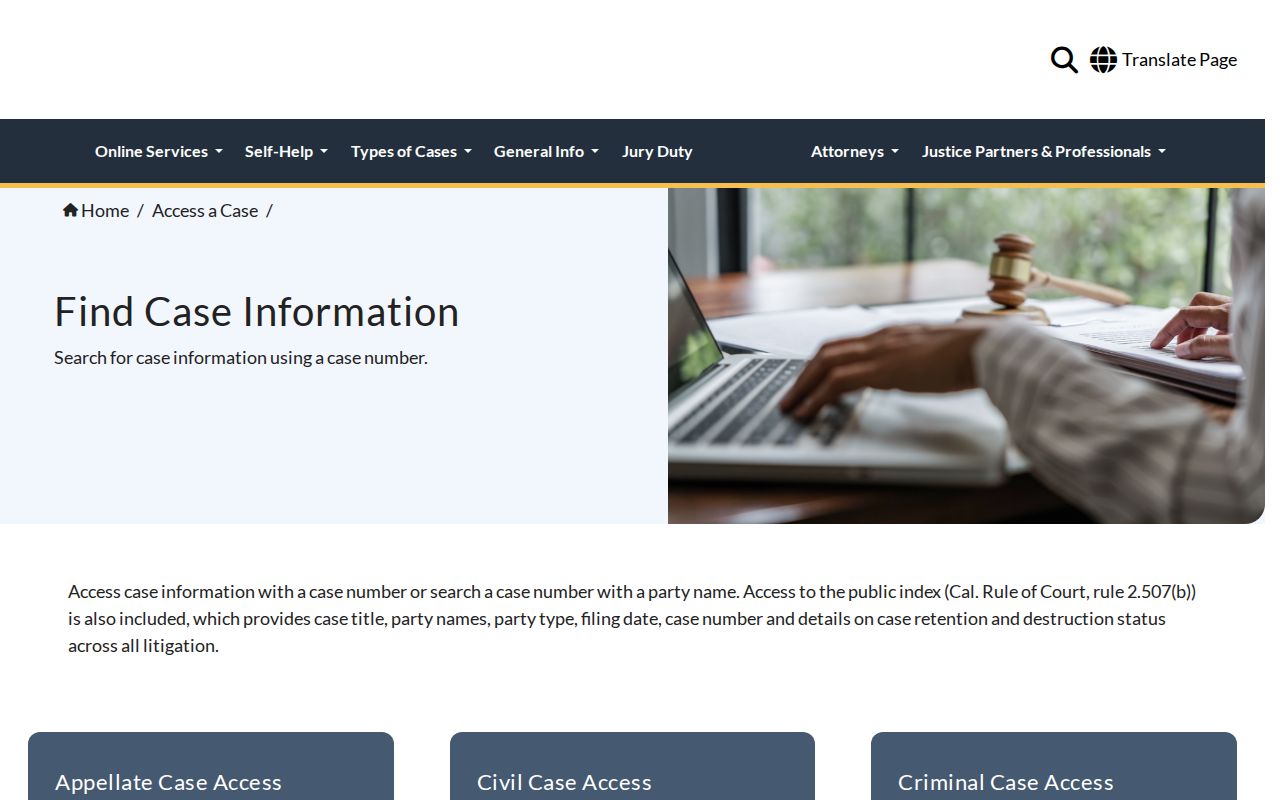
The portal separates case categories because each has its own search and disclosure rules.
Refine a La Puente Court Search
The civil index offers a compact set of fields, but each matters. Start broad enough to catch a spelling variant. Then narrow the result through the case details instead of adding facts the form does not support. A company search is an alternative to the personal-name fields, not an extra last name.
| PAOS Field | Input | Required | Use |
|---|---|---|---|
| Last Name | Text | Yes for a person | Primary party-name key |
| First Name | Text | Conditional | Narrows an individual result |
| Company Name | Text | Alternative | Finds an organization party |
| Case category | Portal selection | No | Routes civil, small claims, family, or probate |
A docket is the ordered case activity list, not the full evidence file. The result may show a case title, party names and roles, filing date, number, category, and summary. Images are not available for every filing. When an index result predates online coverage or omits a needed document, contact the court records channel with the case number.
Can one matching name prove identity? No. A common name can point to several people. Confirm the party role, dates, addresses in a public filing, and other lawful identifiers before relying on a court match.
Follow La Puente Vital Records
Birth, death, and marriage copies for Los Angeles County events come through the RR/CC, while California Department of Public Health Vital Records provides a statewide route. California distinguishes an authorized certified copy from an informational certified copy. Health and Safety Code section 103526 limits authorized copies to eligible people, including the person named, certain family members and representatives, or someone acting under a court order. Other requesters may qualify for an informational copy marked as invalid for identity purposes.
A birth or death application asks for the event details and the requester's relationship. An authorized copy commonly needs a sworn statement, with notarization for many mailed requests. Confidential marriage records are more restricted. They have been an option since 1971 and are available only to the spouses or through a court order. A divorce trail splits in two: the superior court keeps the case and judgment, while CDPH may provide a certificate of record for applicable years.
Historical indexes can help before a copy is ordered. The Los Angeles Public Library guide reports county marriage coverage from 1852, birth records from 1866, and death records from 1877. Obituaries, probate cases, and cemetery sources can confirm that a vital index belongs to the right La Puente family.
Note: Check the current RR/CC or CDPH fee page before ordering because the research does not establish a fixed copy price.
Find La Puente Business Links
The city business directory is a quick way to connect a trade name with a La Puente street address, phone number, and business category. It can be browsed by first letter or filtered by categories such as retail, professional service, manufacturing, nonprofit, or beauty services. The public entry does not show an owner's name, but the city says its license application collects owner names and other business facts. A focused City Clerk request can seek the disclosable part of that application.
Follow the local result with the California Secretary of State business search, a county fictitious business name filing, the Department of Consumer Affairs license search, or a UCC filing when the trade calls for it. Those official sources may show entity status, agents, addresses, registrants, or license standing. The State Controller's free unclaimed property search adds another name-and-address trail for a person or business with reported property.
Note: A directory entry proves that the listing existed; it does not by itself prove who now owns or operates the business.
Limit La Puente Voter Searches
The LA County Voter Registration Status tool is designed for a voter to check a personal record. It requires a last name, birthdate, house number, and ZIP code. California's statewide My Voter Status service can show a voter's party and language preferences, polling information, and vote-by-mail or provisional ballot status after identity details are supplied. A failed match only means those exact inputs did not confirm a record.
The county voter status screen shows why this is not an open people directory.
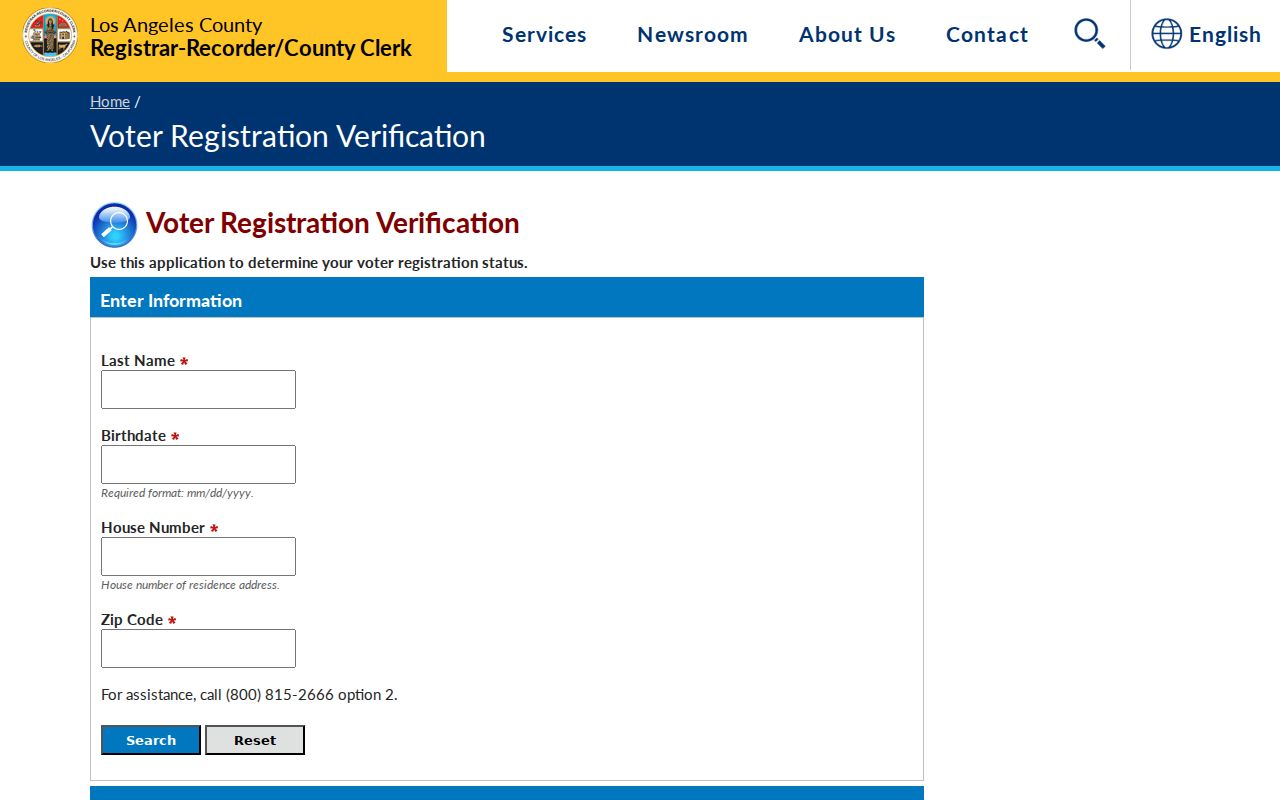
Access to voter files is governed by strict purpose, confidentiality, and fee rules. The detailed process appears in the La Puente voter registration lookup.
California also provides the My Voter Status portal for statewide self-service.
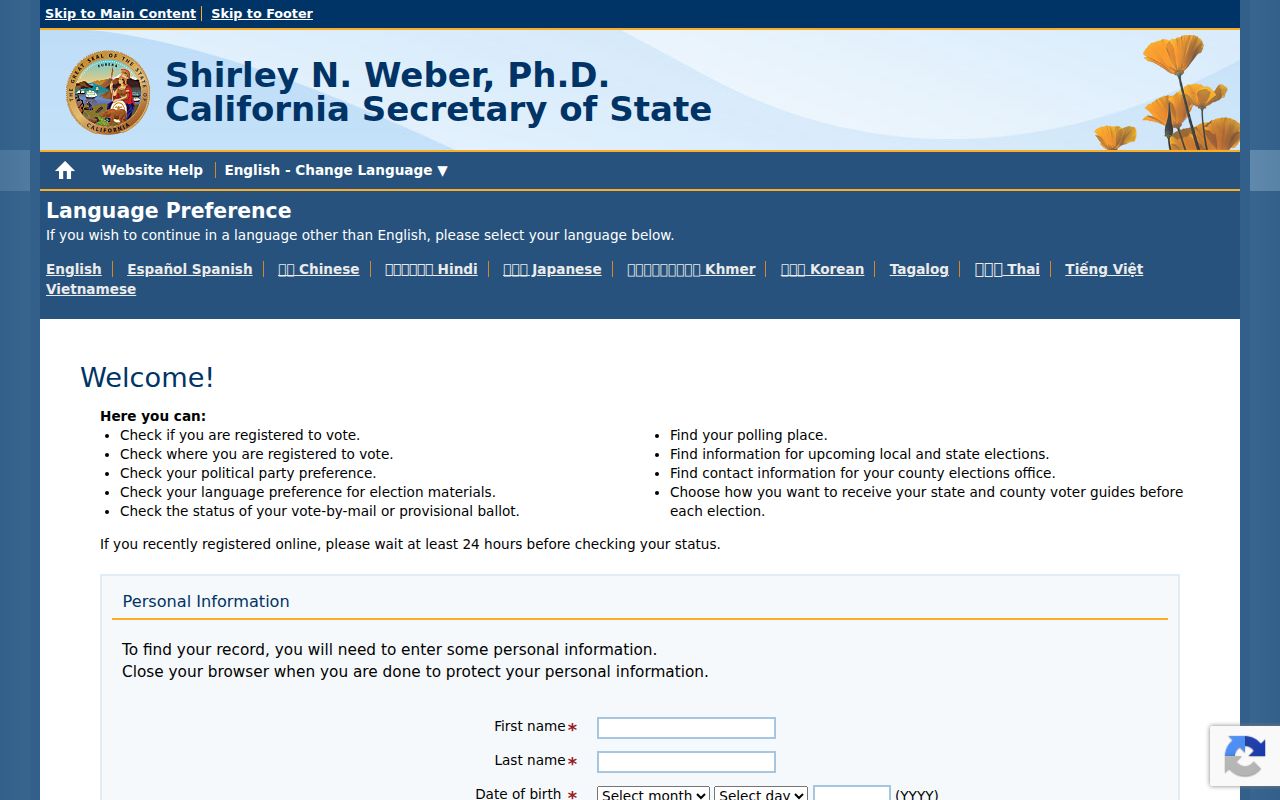
Neither tool reveals how anyone voted. Participation history may identify elections in which a ballot was cast, never ballot choices.
Check La Puente Custody Lookups
La Puente receives local law enforcement service from the Los Angeles County Sheriff's Department Industry Station. The LASD inmate locator covers current county custody, while the California Department of Corrections and Rehabilitation's CIRIS tool covers people currently in state custody. Search results can lag after a recent booking, transfer, or release, so the official phone channel is the fallback for time-sensitive custody facts.
The LASD Inmate Information Center is the county source shown below.
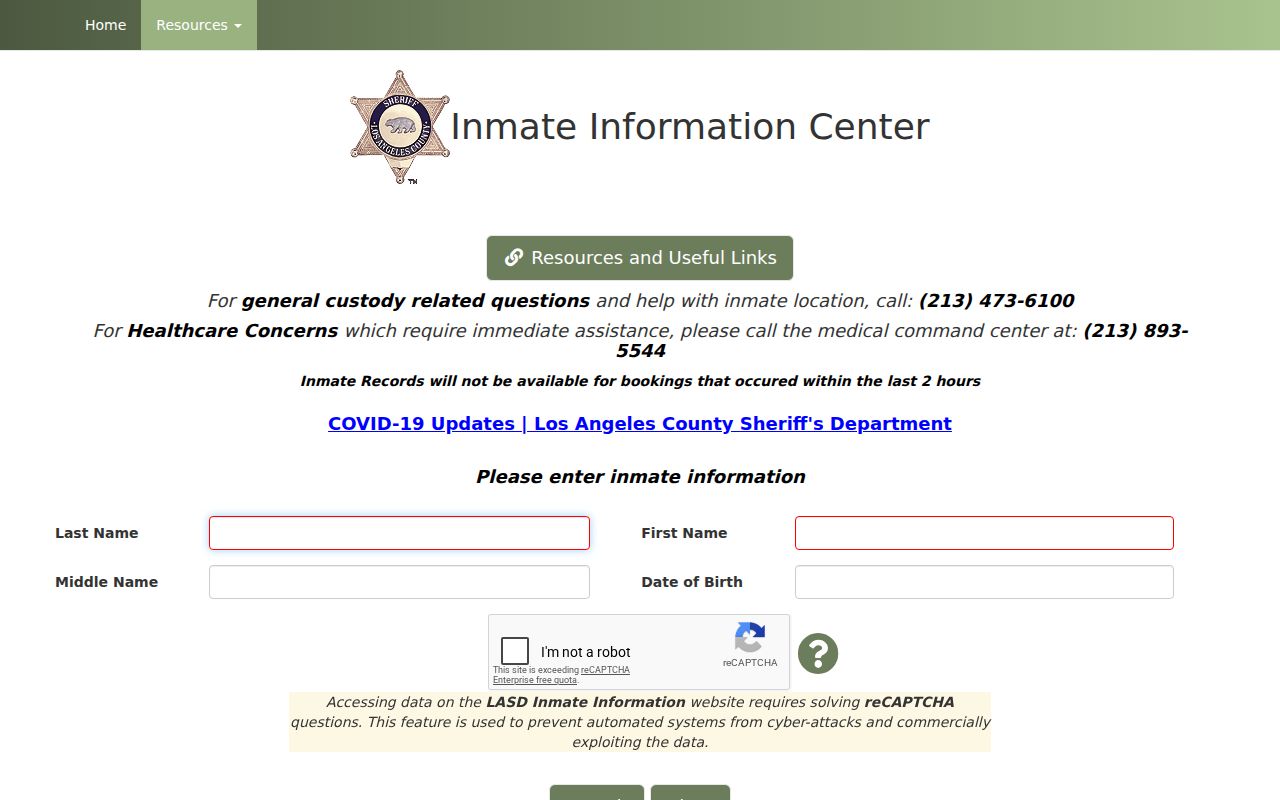
A county custody match should be checked against a booking number or other record detail. For a criminal report, LASD uses phone, mail, and in-person request channels, and access may depend on the requester's relationship to the incident.
Lawful personal use. Use custody and registry records only for legitimate safety or personal research. Never use a record to stalk, threaten, or harass anyone.
Rebuild La Puente History Searches
Libraries fill the years and relationships that modern portals miss. La Puente Library offers newspapers, research databases, telephone help, and access to the Los Angeles Times and San Gabriel Valley Tribune. Sunkist Library is another nearby county branch with its own local history. For deeper work, the Los Angeles Public Library genealogy collection includes city directories, census material, family histories, immigration and military records, newspapers, obituaries, and vital sources.
The La Puente Library branch page shows its research services and newspaper access.
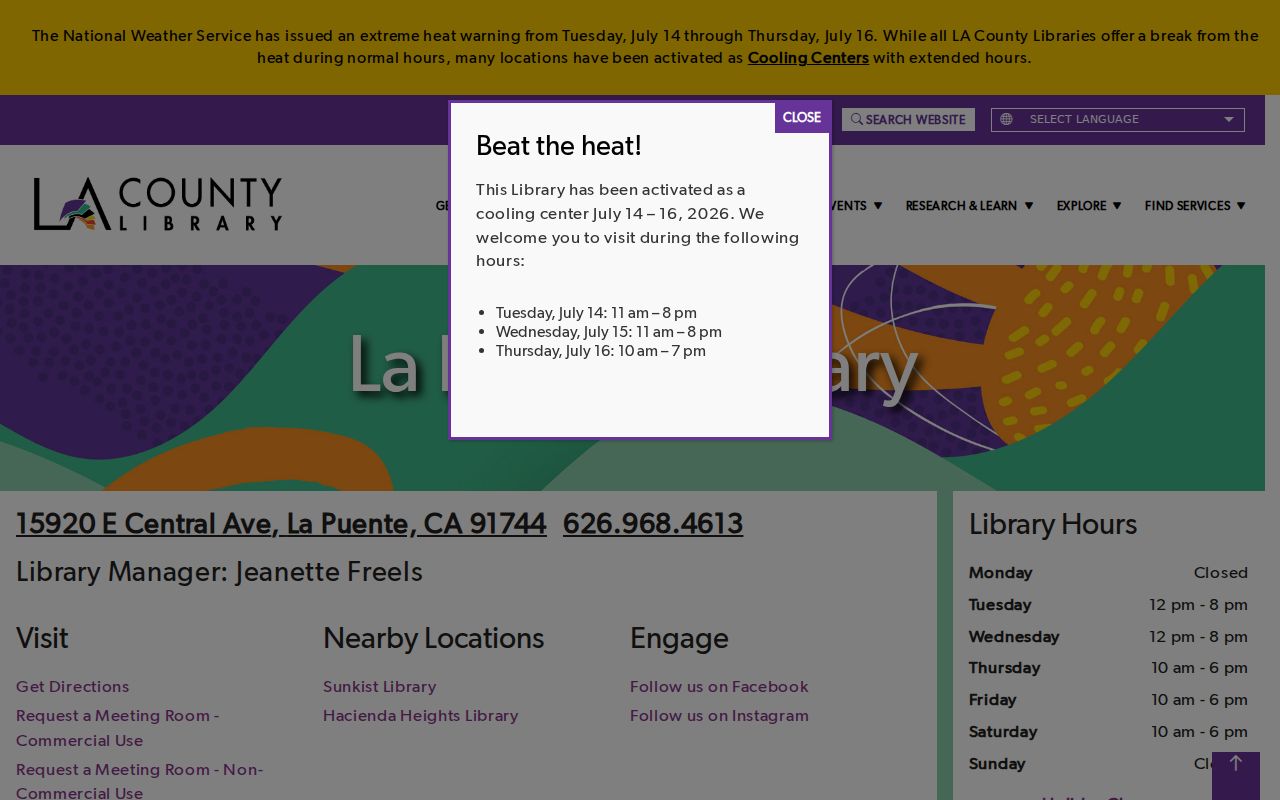
This branch is the closest starting point for a local newspaper or database trail.
The Sunkist Library page adds the second nearby county library channel.
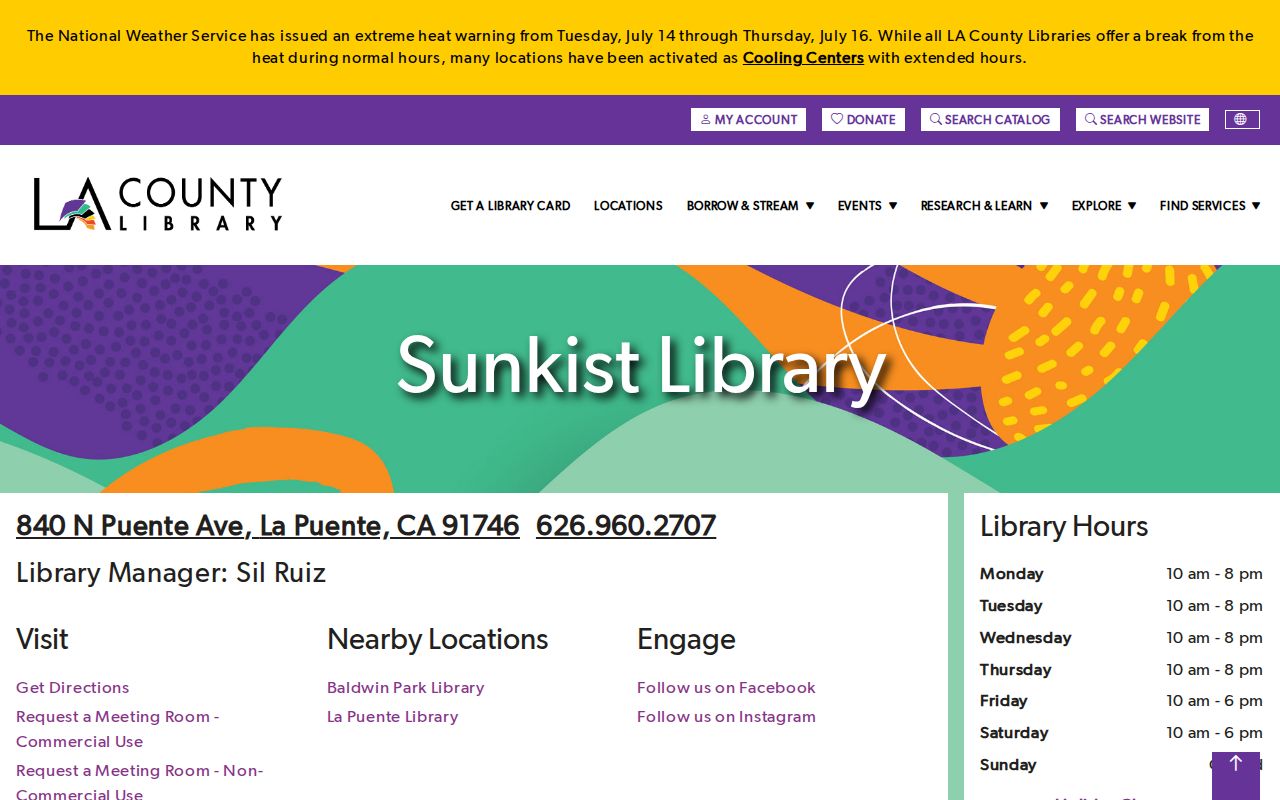
Its branch history is also useful when a record points to the Sunkist area rather than central La Puente.
The LAPL genealogy research guide describes the regional directory and family-history collection.
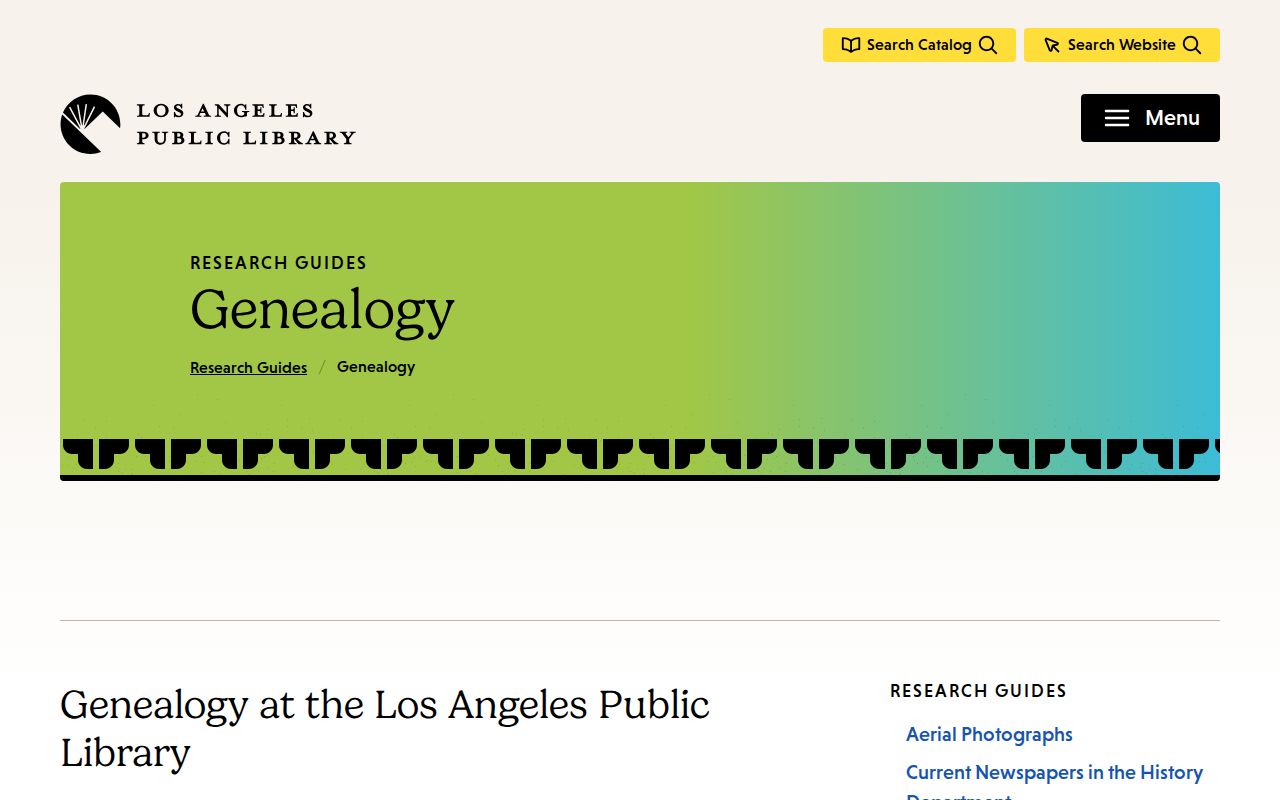
The guide helps identify which city directories, newspapers, census sources, and reference works require a Central Library visit.
A strong family trail may combine a death index, obituary, probate filing, recorded deed transfer, and reverse directory. The California State Archives holds categories such as probate indexes, court files, deeds, naturalization records, vital registers, and historical Great Registers. Coverage varies. NARA describes Los Angeles County Superior Court naturalization records that are not yet digitized, while the Southern California Genealogical Society offers fee-based research help and a large specialist collection.
The California State Archives family-history resources provide the statewide catalog route when county and library sources stop.
Federal population census schedules are public through 1950 under the 72-year rule. Later schedules are still closed. That line matters when trying to move from a mid-century La Puente family to a modern official record.
Read La Puente Record Geography
La Puente incorporated on August 1, 1956. Earlier local records will not sit in a City of La Puente file series that did not yet exist. Search Los Angeles County, Rancho La Puente, school districts, churches, newspapers, and regional libraries instead. The place name itself reaches much further back: it refers to a bridge across San Jose Creek used during the Portola-Serra expedition, and the settlement history includes the large Rancho La Puente land grant.
The 1950s and 1960s were also a major building era. Many tract maps, first-owner deed trails, school records, and phone-directory entries begin near the same time as incorporation. An older legal description may use a tract, lot, rancho, or county label rather than the street wording used now. This is why an Assessor map, deed index, and reverse directory often need to be read together.
Note: Exact La Puente city-directory year runs were not verified, so ask a librarian to confirm holdings before planning a visit.
Protect La Puente Search Privacy
Some missing addresses are protected by law, not lost from the file. California Safe at Home supplies a substitute mailing address to eligible participants, including survivors of stalking and domestic violence. Voter data also has a public and confidential split. Signatures, full birth dates, identity numbers, and protected contact fields are not open simply because the government holds them.
California now offers a separate route for commercial data broker files. The California Privacy Protection Agency registry says the Delete Request and Opt-out Platform, known as DROP, became available to residents on January 1, 2026. Registered data brokers must begin processing platform requests on August 1, 2026. DROP does not erase a court, deed, permit, or other government public record. It targets covered personal information held by registered brokers.
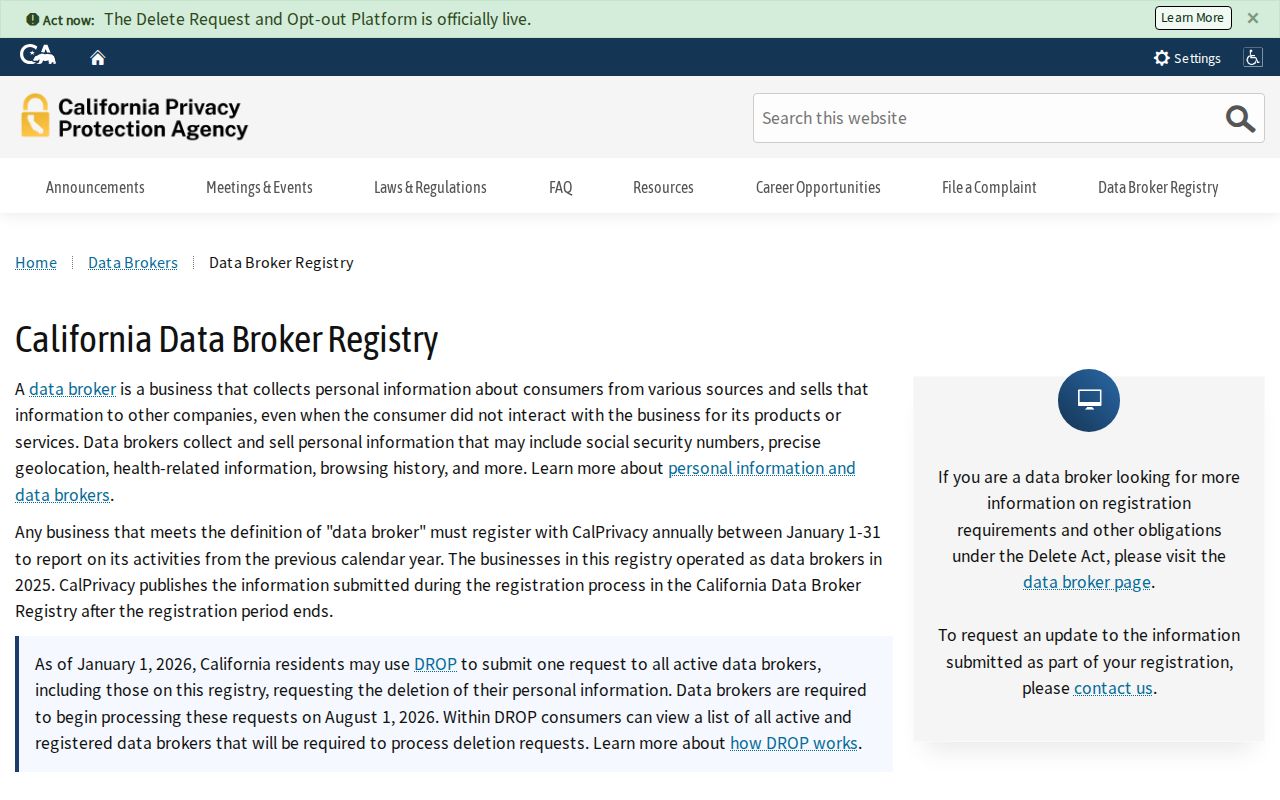
The registry screen separates a broker deletion request from a request to a government records custodian.
Sealed court matters, juvenile and adoption files, confidential marriages, protected voter data, DMV information, and portions of law enforcement or vital records can remain closed or redacted. A public index is not permission to bypass those limits.
Choose La Puente Official Searches
Official records and compiled search products answer different questions. A custodian can explain the source, update cycle, access rule, and copy process for its own record. A compiled product may join many datasets, but it can repeat an old address, merge two people, or omit a protected update. Treat it as a possible lead, never as proof.
| Search Source | Best Use | Main Limit |
|---|---|---|
| Government index | Find a case, parcel, filing, or current agency record | May show only index data |
| Certified copy | Obtain the custodian's formal copy where eligible | Fees and access rules apply |
| Library or archive | Bridge old names, addresses, and family links | Holdings and access vary |
| Commercial compilation | Generate a lead for later checking | May be stale, merged, or wrong |
For a dependable La Puente people search, keep the record number, confirm the person through more than one lawful field, and return to the office that created or keeps the record. That final custodian check is the difference between a plausible name and a supported match.